
First Time at Coffee Fest? Start Here
What actually happens on a specialty coffee trade show floor, and how to walk in as though you have done it before.
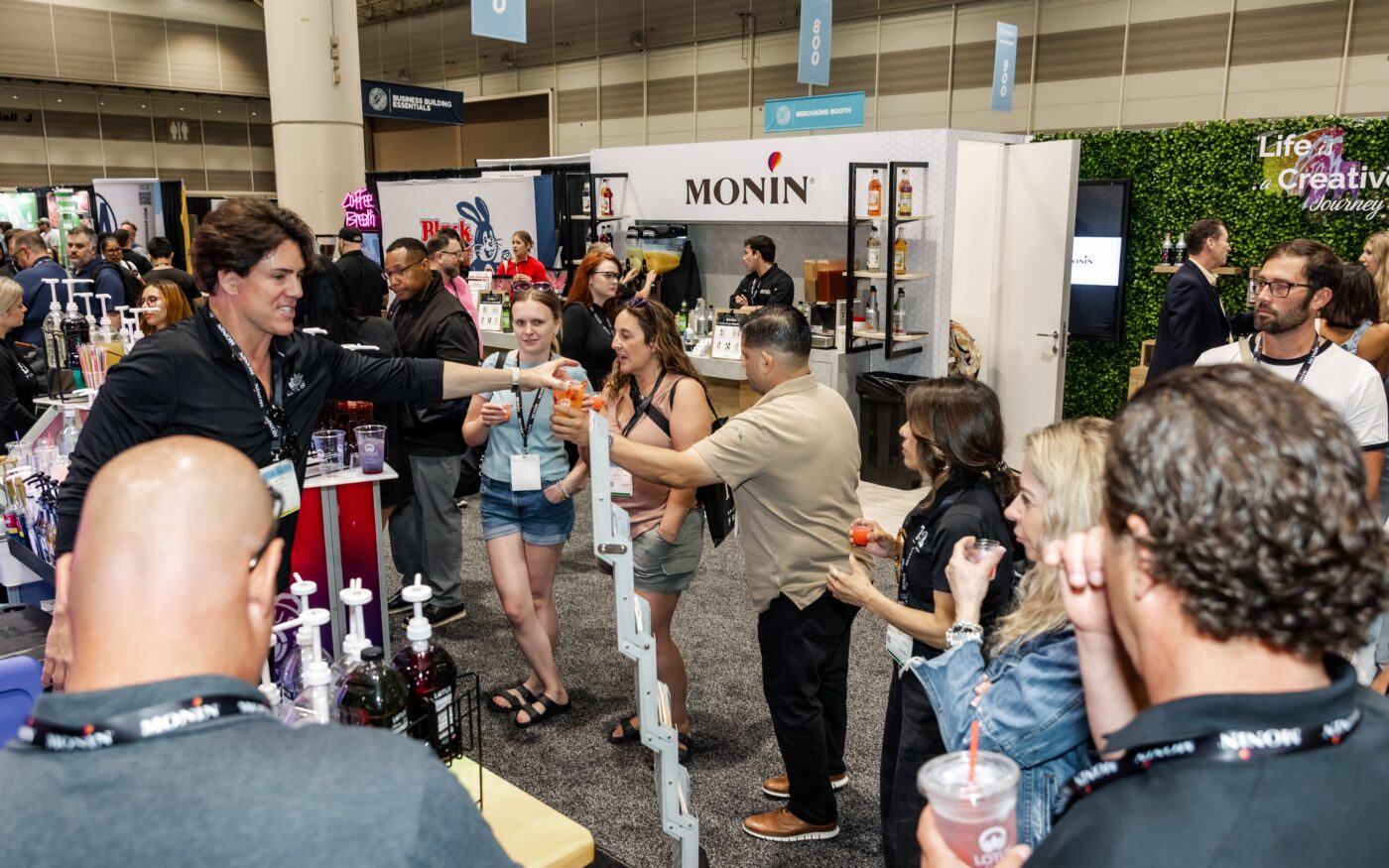
The first time you stand at the entrance to a trade show hall, the scale is the surprise. Not the noise - halls are quieter than you expect - but the sheer number of doors you could walk through, each one a company that would like fifteen minutes of your time.
If Coffee Fest Los Angeles on August 21 and 22 is your first coffee trade show, the useful thing to know is that everyone in that hall was once standing exactly where you are. Here is what the two days actually contain and how to use them.
What a specialty coffee trade show actually is
A trade show is not a festival. Nobody is there to sell you a cup of coffee.
It is a temporary marketplace where the businesses that supply cafés and roasteries set up booths and meet the businesses that buy from them. Espresso machine manufacturers, grinder companies, green coffee importers, contract roasters, syrup and sauce producers, milk and alternative-milk brands, cup and packaging suppliers, point-of-sale and ordering platforms, bakery and food suppliers, water treatment specialists, retail equipment dealers. Two days of face-to-face conversations that would otherwise take six months of emails.
Coffee Fest is specifically positioned around independent specialty coffee businesses - the one-shop owner and the small roaster rather than the national chain. More than 350,000 people have attended its shows over the years. The Los Angeles edition takes place in South Hall G at the Los Angeles Convention Center, with meeting rooms in the 300 Series of the South Building.
Because it is a business-to-business event, attendance requires that you are affiliated with a coffee, tea or related business, or that you are actively planning to open one. Planning counts. If you are eighteen months from a lease, you belong there - arguably more than the person who already signed one.
Who is in the room
Café owners and managers. Baristas, often sent by their employers, often competing. Roasters, from garage-scale to regional. Restaurant and hotel food-and-beverage staff. Distributors and dealers. Consultants and trainers. People who are opening something and want to see the equipment in person before they commit.
On the other side of the tables: exhibitor staff, who fall into two useful categories. Some are salespeople. Some are founders, engineers, roasters or trainers who came to the show because they like talking about the work. Both are worth your time; the second group is where the education is.
What the floor looks like
Rows of booths, numbered, laid out on a grid, with a printed and digital floorplan you should get hold of before you walk in.
Booths range from a table with a banner to a full working bar with plumbing. Coffee companies will be brewing and cupping. Equipment companies will have machines running and will let you pull shots on them. Food and syrup companies will be handing out small tastes. There will be a competition stage, and it will be loud in the good way.
The floor is open Friday, August 21 from 10 a.m. to 5 p.m., and Saturday, August 22 from 10 a.m. to 4 p.m. Registration opens at 7:30 a.m. both days.
The competition is a good way in
The Latte Art World Championship Open runs at Coffee Fest shows, and Los Angeles hosts an Official Competition - the full-size version, a 64-competitor bracket.
The format is easy to follow even if you have never watched one. Two baristas face off head to head, each pouring a free-pour drink, and judges pick a winner on the spot. Sudden death. Lose and you are out. The bracket narrows through the show until someone takes the $6,000 first prize, with $2,500 for second and $1,500 for third. Judging is led by head judge Terika Raak, with permanent panelist Antoine “Twizz” Franklin and a rotating local guest judge.
For a first-timer this is the single best place to start your day. It is genuinely instructive - you will see more milk texture and pour technique in twenty minutes than in a month behind your own bar - and standing in a crowd watching something is a much easier place to strike up a conversation than a booth aisle. “Have you seen this format before?” is a complete opening line.
If you want to compete rather than watch, the entry process is worth understanding: applicants submit five latte art photos including at least three varying designs, and are reviewed blind by the head judge on competition history and the photos alone.
Education is the other half of the show
Your badge is not just a floor pass. General Admission includes access to the complimentary seminar program, and the Coffee Skills Series offers hands-on, small-group training with the show’s training team and industry instructors including Tim Heinze and Anita Tam.
The tracks cover the things a new operator actually needs. Barista training: espresso extraction, milk steaming, latte art, workflow efficiency, signature drinks. Sensory and cupping: how to taste, how to run a cupping, origin-focused tastings. Brewing methods: pour-over technique and equipment-specific instruction. Coffee science: grinder maintenance, processing methods, blending, espresso machine technical skills. Plus specialty sessions on alternative milk steaming, matcha and tea beverages, and energy drink programming.
Some sessions are included with General Admission; the Gold Pass badge includes select paid workshops. There is also a Team Bundle - five badges for the price of four - if you are bringing staff.
Book early. Capacity is limited and workshops regularly sell out before the show opens.
How to talk to an exhibitor
This is the part that intimidates new attendees, and it should not.
Lead with what you are. “I’m opening a 900-square-foot shop in Long Beach next spring” tells someone everything they need to help you. So does “I’ve been roasting five pounds a week at home and I want to understand what going commercial looks like.” Exhibitors are not scoring you on size. A first-time owner asking real questions is a better prospect than a tire-kicker with an existing shop.
Ask open questions rather than yes-or-no ones. Not “does this work for a small bar” but “walk me through how this performs on a busy small bar.” Not “is it expensive” but “what does a full setup usually cost by the time it’s installed and running.”
Ask what happens after the sale - service coverage in Southern California, warranty terms, parts availability, training. That question marks you as serious faster than anything else you can say.
It is completely fine to say “I’m not buying today, I’m learning.” Most people will relax and tell you more.
And it is fine to leave. “Thank you, this was helpful, I’m going to keep walking” is a normal, polite end to a conversation. You do not owe anyone a purchase for a sample.
Floor etiquette, briefly
Do not stand in the aisle blocking a booth entrance. Step inside or move on.
Sip and dump. Sampling areas commonly provide a dump bucket. Using it is normal professional behavior - it is what buyers do, and nobody is offended.
Ask before you photograph a booth setup, a menu or an equipment configuration. Almost everyone says yes.
Do not eat lunch at a food exhibitor’s booth. Samples are samples.
Wear your badge visibly. It is how people know who you are.
Wear real shoes. Concrete floors under thin carpet will find you by 2 p.m.
Bring business cards even if you think nobody uses them. On a trade show floor, they still do.
The follow-up is where the value is
Here is the thing nobody tells first-timers: the show is not the show. The show is the list of people you can now email.
Sort your cards and scans within a day or two into three groups - act now, revisit this quarter, keep warm. Send short, specific emails to the first group referencing where you met and what you talked about. Exhibitor staff meet hundreds of people in thirteen hours; specificity is what makes you memorable.
Connect with the other attendees you met, not just the vendors. The operator two years ahead of you who tells you what they would do differently is worth more than any brochure in your bag.
Practical basics
Coffee Fest Los Angeles runs August 21 and 22, 2026 at the Los Angeles Convention Center, 1201 South Figueroa Street.
Badges must be collected at registration with a government-issued photo ID. On-site registration is available, but advance registration is strongly advised because sessions fill.
Getting there: Pico Station on the Metro A and E Lines is about an eight-minute walk. 7th Street/Metro Center on the A, B, D and E Lines is ten to fifteen. Metro bus lines 30, 81, 442 and 460 serve the area, DASH Route F stops on Figueroa, and Metrolink riders get a free Metro transfer. Driving, the South Hall Garage is the closest option, with flat event rates generally between $35 and $45, cards only, no re-entry. Set navigation to your specific garage rather than the building address, since Pico Boulevard between Figueroa and LA Live Way is closed for the convention center expansion.
Bringing family: children 12 and under need a $10 child badge purchased on site after a parent signs a waiver; anyone 13 or older needs a General Admission badge.
Arrive at 8 a.m. on Friday, get your badge before the doors open, and spend the first thirty minutes just walking. By hour three you will have stopped feeling like a visitor.
Sources
- Coffee Fest Los Angeles 2026
- Attend | Coffee Fest Los Angeles
- Coffee Fest Frequently Asked Questions
- Coffee Skills Series | Coffee Fest
- Latte Art World Championship Open | Coffee Fest
- Coffee Fest 2026 | Los Angeles Convention Center
- Directions & Getting Here | Los Angeles Convention Center
- Parking | Los Angeles Convention Center
Research verified August 8, 2026. Schedules, exhibitors, speakers, prices and access details may change; confirm current information with the organizer before attending.
Also exhibiting at Coffee Fest 2026
Show page →Toddy, LLC
Since 1964, the Toddy® Cold Brew System has relied on a unique immersion brewing process to produce rich,…
Torani
Torani is deeply committed to being an amazing flavor company whose purpose is “Flavor for All, Opportunity for…
Keep reading

First Time at TheFitExpo? An Attendee’s Guide to Anaheim
Two days, eleven-plus free competitions, hundreds of booths and a 9:30am start - how to plan August 29–30 at the Anaheim Convention Center.
How to Shop TheFitExpo Anaheim Like a Buyer, Not a Browser
A category-by-category checklist for comparing supplements, food, apparel, equipment, recovery products and training credentials on a crowded consumer show floor.
Fit Pro Anaheim: Careers, Certification and Recruiting on the Expo Floor
The Anaheim Convention Center weekend doubles as a two-day hiring hall, classroom and credentialing desk for the people who make their living in fitness.