
First Time at California Restaurant Show? An Operator’s Playbook
Badges, hours, routes, tasting strategy and Anaheim logistics - everything a first-time attendee needs to turn three days on the floor into signed decisions.
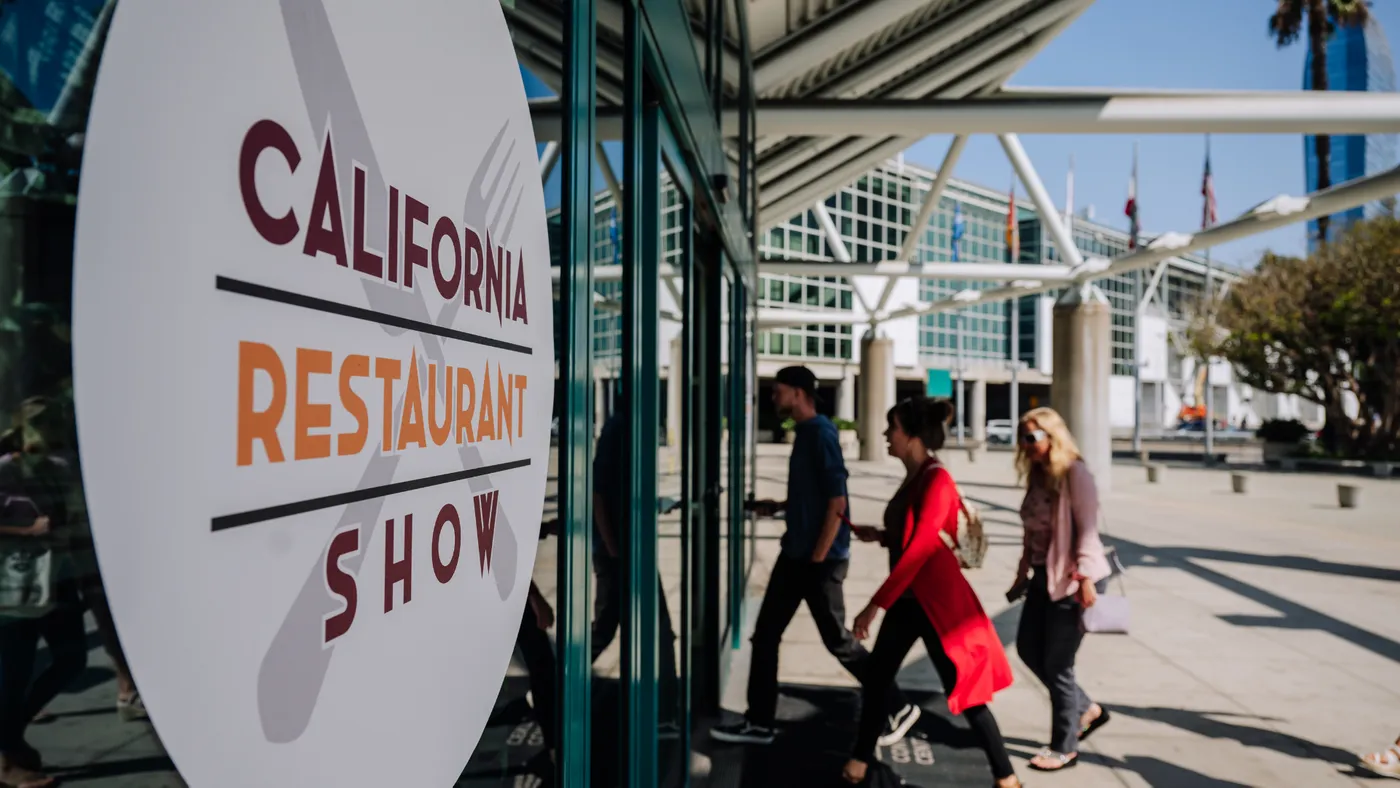
The difference between a productive trade show and an expensive walk is almost entirely decided before you arrive. Operators who show up with a route, a shortlist and a follow-up system leave Anaheim with quotes, samples and a decision or two already made. Operators who show up curious leave with a tote bag.
The California Restaurant Show runs August 23–25, 2026 at the Anaheim Convention Center, 800 W. Katella Avenue. It is produced by Restaurant Events LLC in partnership with the California Restaurant Association, and it draws more than 7,000 registrants against a floor of over 250 exhibiting companies. Here is how to work it.
Who qualifies, and how registration works
This is an industry-only event and is not open to the public. Qualifying attendees include independent owners, quick-service operators, chefs, caterers, bakers, bar and nightclub operators, food truck operators, and foodservice personnel from hotels, hospitals, universities, corporate dining and sports venues. Distributors and manufacturers attend as well.
Registration runs through the show’s registration page. Advance rates apply through August 15, 2026 - register before that date and you save meaningfully over onsite pricing.
Three things worth knowing about badge structure:
Every registration includes full access to all educational sessions, live culinary demonstrations, and entry to the exhibit hall, plus the Pizza Tomorrow Summit Pavilion. The education program is not an upsell.
The Full Experience Pass at $179 adds all three long-form workshops in Room 201A - the David Scott Peters full-day intensive on Sunday and the Restaurant Management 201 and 301 tracks on Monday and Tuesday.
The Team Bundle at $195 covers up to six people from the same organization at advance rates. If you are bringing any team at all, this is the line item to look at first. California Restaurant Association members receive complimentary admission for themselves and their teams.
Culinary students register at $30 per person, with one faculty chaperone aged 21 or over required per five students and a maximum of ten students per institution. Register online in advance and print or save your barcode. Badge pickup opens at 8:30am each morning - Sunday and Monday until 5pm, Tuesday until 4pm.
The three-day rhythm
The floor opens at 10am Sunday and Monday and closes at 5pm. Tuesday runs 10am to 4pm. Each day has its own character, and matching your objectives to the right day is the single highest-leverage planning move you can make.
Sunday is a good reconnaissance and deep-demo day. Use the opening hours to learn the floor and complete the conversations that need the most time. It is also the day the Peters full-day workshop runs, 9am to 5pm, so if you are taking that, plan to see nothing else.
Monday is the peak. Tyler Florence takes the Culinary Innovation Theater at 1pm, the CRA Legal Center Live panel runs at 11am, and the floor is at its fullest. Treat Monday as your relationship day - meet the people you identified Sunday, bring your chef, and let the energy work for you.
Tuesday is short and it is the closing day. Use Tuesday to close information gaps, request final written terms and collect anything still missing. It is also the last chance to collect anything you meant to and did not.
Badge pickup at 8:30am gives you ninety minutes before the halls open. Use it. Coffee, the floor plan and a written priority list.
Planning a route through the hall
The show publishes an interactive floorplan, and the show’s mobile app is worth downloading before you travel. Save priority companies and categories in the live directory, then use the current floor plan to build the route.
Use the live directory to group suppliers by category and save priority companies before arrival. The floor plan can change, so recheck the route in show week.
Walk the perimeter first, at pace, without stopping. Twenty minutes gets you the shape of the floor and catches the three booths you did not know you needed. Then work your priority list.
Divide your list into two tiers before you arrive: decision booths, where you intend to get a quote or place an order, and survey booths, where you want to see what exists. Give decision booths twenty minutes each and survey booths four. If you have not written this down, you will spend forty minutes at the first interesting thing you see and never recover the day.
Talking to equipment and technology vendors
Equipment and technology are the two categories where a badly run conversation costs you real money later.
For equipment, arrive with numbers. Hood dimensions, available electrical service including whether you have three-phase, door widths on the path from your loading area to the line, and your actual covers at peak. A combi oven conversation without those figures is a brochure exchange. Ask about local service coverage in Southern California and typical parts lead time. Ask what the warranty covers in year two.
The frying category is unusually deep this year, and the vendors are close enough together to run a genuine comparison in one pass. Ask each one the same question: what does this do to my oil life, in days, at my volume.
For technology and POS, the discipline is a fixed question set that you ask every single vendor. Total monthly cost including hardware. Effective processing rate on your average ticket, not the headline rate. Contract length and early termination terms. Whether you own the hardware. What integrations exist with the accounting and scheduling systems you already run. And what happens to your data if you leave.
Toast, Square, Clover, SpotOn and Shift4 all exhibit. Seeing five point-of-sale platforms in one afternoon, with the same five questions, is a genuinely rare opportunity - take notes in a single comparison table rather than collecting five sets of collateral.
Sampling and tasting strategy
There is more food on this floor than any person can eat, which is precisely the problem.
Eat before you arrive. Tasting on an empty stomach ruins your palate by 11am and your judgment shortly after. Carry water and drink more of it than feels necessary - the halls are dry and you will be talking all day.
Taste with intent. Pick three or four categories that genuinely map to menu gaps you already have, and go deep on those rather than grazing. The dairy and Taste of Asia groupings are both built for comparative tasting - a dozen soy sauces side by side is something no sales call can replicate.
Photograph the label and company name before you taste, not after. By 3pm you will not remember which sample was which, and a photo of the spec sheet is worth more than the sample itself.
Ask the commercial questions while the flavor is still in your mouth: case pack, minimum order, price per portion at your yield, shelf life, and which Southern California distributor carries it. A product you love that nobody local carries is a product you cannot put on a menu.
Bringing a team and splitting coverage
The Team Bundle at $195 for up to six people is designed for exactly this, and the show is far better with two or three people than one.
Split by function. Send your chef to food, ingredients and the Culinary Innovation Theater. Send your general manager or controller to technology, back office and services. Take equipment and the long-form workshops yourself. Agree in advance that nobody visits another person’s category - duplicated coverage is the most common way teams waste a show.
Set two rendezvous points per day: lunch and end of floor. Fifteen minutes each, comparing notes while they are fresh. On the education side, coverage matters even more - Theaters 1001 and 1055 run concurrently all three days, so two people can capture twice the program.
Give each person a one-page brief before travel: their categories, priority companies and the three questions they must ask in every serious conversation.
Anaheim Convention Center logistics
The Anaheim Convention Center is the largest convention facility on the West Coast at roughly 1.8 million square feet, sitting on Katella Avenue in the heart of the Anaheim Resort district.
Driving and parking. The center is reached from I-5 north or south and SR-57, then east or west on Katella. Onsite parking is tiered by lot proximity, currently published in $25, $30 and $35 tiers per entry, and the facility is cashless - credit, debit, Apple Pay and Google Pay only. Anaheim GardenWalk, adjacent to the campus, is a reliable overflow option at around $18 with convention validation, three to five minutes away via covered walkways. Arriving before 9:30am gets you the closer lots.
Air. John Wayne Airport (SNA) in Santa Ana is the closest at roughly fifteen to twenty minutes by car. Long Beach (LGB) is a comparable drive. LAX offers the widest schedule at roughly an hour depending on traffic - worth the trade only if the fare difference is significant.
Rail. The Anaheim Regional Transportation Intermodal Center (ARTIC) is served by Metrolink’s Orange County Line and Amtrak’s Pacific Surfliner, a short rideshare from the convention center. For operators coming from Los Angeles, San Diego or the Inland Empire, the train removes both the traffic and the parking question.
Hotels. Connections Housing is the show’s exclusive official housing partner, offering negotiated rates with a best-rate pledge and no deposit or pre-payment required. The booking deadline is July 30, 2026. Connections Housing is the only official housing company associated with the show - book through them or directly with the hotel.
The advantage of the Anaheim Resort district is walkability. A large number of hotels sit within a five to fifteen minute walk of the convention center along Katella and Harbor. Staying within that radius eliminates parking entirely and lets you drop samples at your room mid-day rather than carrying them for eight hours. OCTA bus service runs along the Katella corridor, and rideshare pickup zones operate on the campus.
On the floor. Wear shoes you have already broken in. Bring a portable charger - you will be scanning, photographing and taking notes all day. Bring twice the business cards you think you need, and carry a compact bag rather than a rolling case.
Following up afterward
The show ends Tuesday at 4pm. What happens Thursday determines whether it was worth attending.
Most exhibitors scan your badge, which means your contact details are already in their system and you will hear from them. That is not follow-up - that is a mailing list. Real follow-up runs the other direction.
Within 48 hours, before the details blur, sort your collected material into three piles: act now, evaluate this quarter, and reference. Send a short personal email to every act-now vendor referencing the specific conversation and asking for the specific thing you need - a written quote at your volume, a site visit, a trial unit, a distributor introduction.
Show pricing is usually time-bound. If a vendor offered you a show special, ask in writing before the window closes what the terms are and how long they hold.
Then hold a thirty-minute debrief with everyone who attended. Each person names their top three findings and one recommendation. Assign an owner and a date to each. A trade show that generates three tracked decisions has paid for itself several times over on a $179 badge.
Sources
- California Restaurant Show - Show Information
- California Restaurant Show - Registration Information
- California Restaurant Show - Hotel & Travel
- California Restaurant Show - New to the Show
- California Restaurant Show - Official Exhibitor Directory
- California Restaurant Association - California Restaurant Show
- ParkingAccess - Anaheim Convention Center Parking
Research verified August 8, 2026. Schedules, exhibitors, speakers, prices and access details may change; confirm current information with the organizer before attending.
Keep reading

First Time at TheFitExpo? An Attendee’s Guide to Anaheim
Two days, eleven-plus free competitions, hundreds of booths and a 9:30am start - how to plan August 29–30 at the Anaheim Convention Center.
How to Shop TheFitExpo Anaheim Like a Buyer, Not a Browser
A category-by-category checklist for comparing supplements, food, apparel, equipment, recovery products and training credentials on a crowded consumer show floor.
Fit Pro Anaheim: Careers, Certification and Recruiting on the Expo Floor
The Anaheim Convention Center weekend doubles as a two-day hiring hall, classroom and credentialing desk for the people who make their living in fitness.