
Science on the Program: JPL, Rocket Engineers and the Real Space Community at LAcon V
Anaheim sits about 35 miles from the lab that lands things on Mars - and LAcon V has put two of its engineers on the guest list.
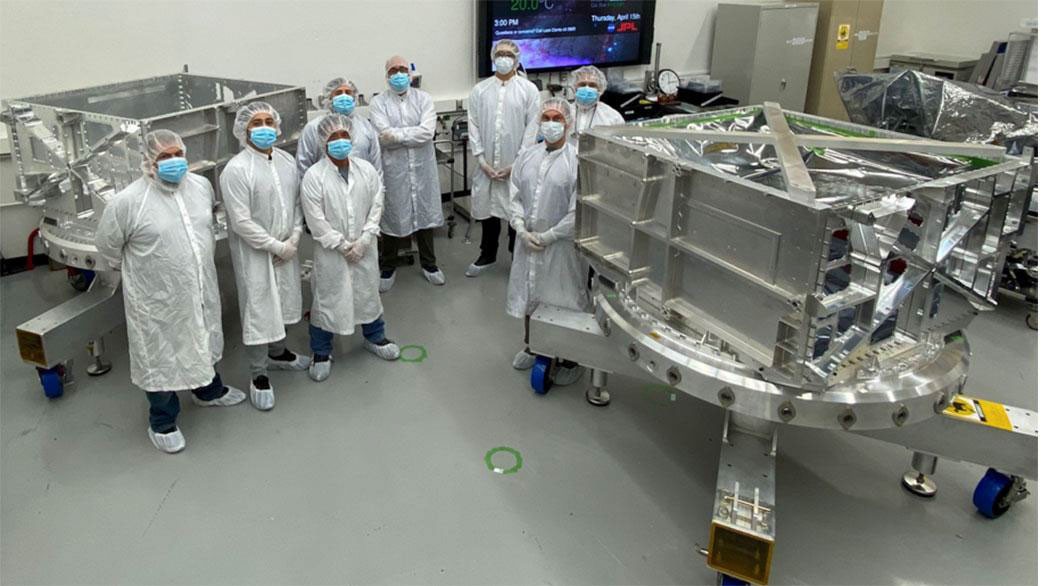
Most science fiction conventions are content to talk about spaceflight. LAcon V is being held down the freeway from the place where it is designed, built and flown.
NASA’s Jet Propulsion Laboratory has been in Pasadena since 1936, when a handful of Caltech students started testing rocket motors in the Arroyo Seco. It is now a federally funded research and development center managed by Caltech for NASA, and it is responsible for a disproportionate share of what humanity knows about the outer solar system. From the Anaheim Convention Center, it is roughly a 35-mile drive.
Two of the people who work in that world are on LAcon V’s guest list: Dr. Anita Sengupta as a Guest of Honor, and Tracy Drain as a Special Guest. Between them they have flown hardware to Mars, Jupiter, an unexplored metal asteroid, and the International Space Station.
The parachute that landed Curiosity
Sengupta took her MS in 2000 and her PhD in 2005 in aerospace engineering at USC’s Viterbi School, and spent much of her career at JPL. Her early work included the ion propulsion system for Dawn, the mission that orbited both Vesta and Ceres.
Her best-known contribution came at Mars. As lead systems engineer, Sengupta led development of the parachute system that decelerated Mars Science Laboratory during Curiosity’s 2012 entry, descent and landing - the sequence NASA’s own engineers nicknamed the seven minutes of terror.
The numbers explain why it was hard. Curiosity’s canopy was 21.5 meters across, the largest ever flown at Mars. Viking’s was 16.5 meters, the Spirit and Opportunity chutes 14.1, Pathfinder’s 12.7, Phoenix’s 11.8. It deployed at roughly Mach 1.7 during descent and rapidly slowed the spacecraft, before handing off to a rocket-powered sky crane that lowered a one-ton rover onto the surface at about half walking pace.
Sengupta went on to lead testing of the drogue parachutes for Orion, the crew vehicle of NASA’s Artemis program.
The coldest place in orbit
She then took on something entirely different as project manager of JPL’s Cold Atom Laboratory, an experiment about the size of a mini fridge that launched to the International Space Station on May 21, 2018.
Cold Atom Laboratory uses lasers to chill atoms to a fraction of a degree above absolute zero, cold enough to produce Bose-Einstein condensates - a fifth state of matter in which quantum behavior becomes observable at a scale a human being can measure. It made the first such condensates in Earth orbit. Microgravity is the point: without gravity pulling the cloud apart, the condensates persist far longer than they can in any laboratory on the ground. The work earned a Popular Mechanics Breakthrough Award and has appeared in Nature.
Hyperloop, hydrogen and a pilot’s license
Sengupta later served as Senior Vice President of Systems Engineering at Virgin Hyperloop, working on high-speed ground transport. In 2020 she founded Hydroplane Ltd., which is developing hydrogen fuel cell powerplants for aircraft with the aim of decarbonizing aviation; the company has taken contracts from the Air Force, Marine Corps and Army.
She holds a research faculty appointment in astronautical engineering at USC, where she teaches entry, descent and landing to graduate students - the same subject she practiced on Mars. She is an FAA-licensed commercial pilot, and her honors include induction into the Women in Emerging Aviation Technologies Hall of Fame and the National Aeronautic Association’s Stinson Trophy, both in 2022.
Tracy Drain, flight systems engineer
Tracy Drain took a mechanical engineering degree at the University of Kentucky in 1998, a master’s at Georgia Tech in 2000, and an internship at JPL the same year. She was the first person in her immediate family to earn a college degree. She has been at the lab ever since - more than 25 years of developing, testing and operating robotic spacecraft.
The list is a tour of the last quarter century of planetary exploration. She was lead systems engineer on Mars Reconnaissance Orbiter after launch. She was Mission Readiness Lead on Kepler, the telescope that turned exoplanets from a handful of curiosities into a catalogue of thousands. She was deputy chief engineer on Juno, which has been mapping Jupiter’s gravity and magnetic field since 2016. She worked on Psyche, bound for a metal-rich asteroid.
She is now Chief Engineer for Europa Clipper, which launched on October 14, 2024, and is one of the most ambitious planetary missions NASA has ever flown. With its solar arrays deployed the spacecraft spans more than 100 feet. It carries nine instruments plus a gravity experiment, will travel about 1.8 billion miles, and on arrival in April 2030 will make 49 close passes of Jupiter’s moon Europa to determine whether the ocean beneath its ice could support life.
Drain also serves the National Academy of Sciences’ Science and Entertainment Exchange, which connects working scientists with filmmakers and writers, and appears in National Geographic Live’s stage programming. Her honors include two NASA Exceptional Achievement Medals and JPL’s Bruce Murray Award.
A regional advantage
Worldcon has always sat close to working science. Hugo Gernsback, whose name is on the field’s most famous award, founded Amazing Stories on the premise that the fiction and the engineering belonged in the same conversation, and Worldcon programs have carried practicing scientists ever since.
Southern California makes that easy. Beyond JPL, the region carries a dense concentration of the aerospace industry, from El Segundo and Redondo Beach to Long Beach and Huntington Beach. LAcon V’s program participant list reflects it: alongside Sengupta, it includes Bill Higgins, a retired Fermilab physicist who worked on particle beam transport and has been a NASA Solar System Ambassador since 1999, with eyewitness experience at spacecraft encounters; Andra Keay, director of Silicon Valley Robotics and a Robotics Fellow at Singularity University; Aaron M. Roth, an AI researcher who has led robotics teams at Carnegie Mellon and the University of Maryland; and Breeann Kyte Kirby, a former research biologist with a forthcoming MIT Press book on bacteriophage dynamics. The convention also runs a dedicated academic track.
Dare to explore
LAcon V runs August 27–31, 2026, at the Anaheim Convention Center with the Hilton Anaheim and the Anaheim Marriott, organized by the Southern California Institute for Fan Interests, a California 501(c)(3). The theme is “Dare to Discover, Dare to Explore, Dare be Uncharted!”
The rest of the guest list - Barbara Hambly, Ronald D. Moore, Colleen Doran, Tim Kirk, Geri Sullivan, Stan Sakai, with Ursula Vernon as toastmaster - covers the storytelling side. Sengupta and Drain cover the part where the hardware has to actually work.
That is the offer at a Worldcon in this particular corner of California: a five-day convention about imagined spacecraft, held within an hour’s drive of the building where the real ones are flown, with the engineers who fly them sitting on the panels.
Sources
- Cold Atom Laboratory - NASA Jet Propulsion Laboratory
- How Curiosity Will Land on Mars, Part 2 - The Planetary Society
- Europa Clipper - NASA Science
Research verified August 8, 2026. Schedules, exhibitors, speakers, prices and access details may change; confirm current information with the organizer before attending.

ShowFloor Staff
SHOWFLOOR.TV's editorial team reports on trade shows, conventions, exhibitors, product launches and attendee strategy. Coverage is produced under SHOWFLOOR.TV's published editorial standards and correction policy.
Also exhibiting at LAcon V / 84th World Science Fiction Convention 2026
Show page →M. Todd Gallowglas
Last week, I was straightening up some things in the writing corner of my room, and I came…
Queen of Mercia LLC
Madeleine is the writer/creator of the steampunk supernatural graphic novel, prose, and audio drama series, Boston Metaphysical Society…
Somanyrobots Games, LLC
Somanyrobots Games, LLC is listed as a dealers room vendor for LAcon V / 84th World Science Fiction…
Keep reading
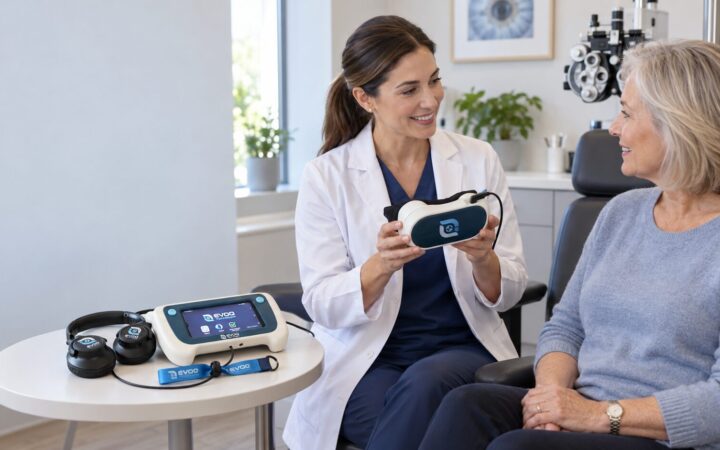
EVOQ Brings Twilight Dark Adaptometer and New Night Vision Monograph to Academy 2026 Anaheim
The first-time exhibitor is demonstrating a new portable dark adaptation device and making the case for measuring night vision loss complaints in primary eye care.

Soake Pools Brings Its New Pool with a View to ASLA 2026
At booth 1850, Soake Pools will show landscape architects, builders and designers how a precast plunge pool can shorten construction and expand the possibilities for outdoor living.
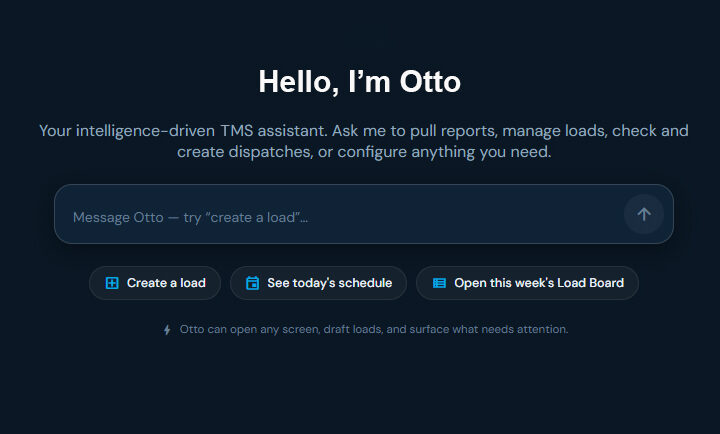
DispatchMVP Brings Otto to California Trucking Show 2026
At Booth 1600, carriers, owner-operators, brokers and 3PLs can test DispatchMVP v2.0 and see how the Otto interface handles trucking workflows through voice or text.