
How to Work the Floor: An Operator’s Guide to Coffee Fest LA
Two days, one hall, and a plan for getting more out of it than a tote bag full of sell sheets.
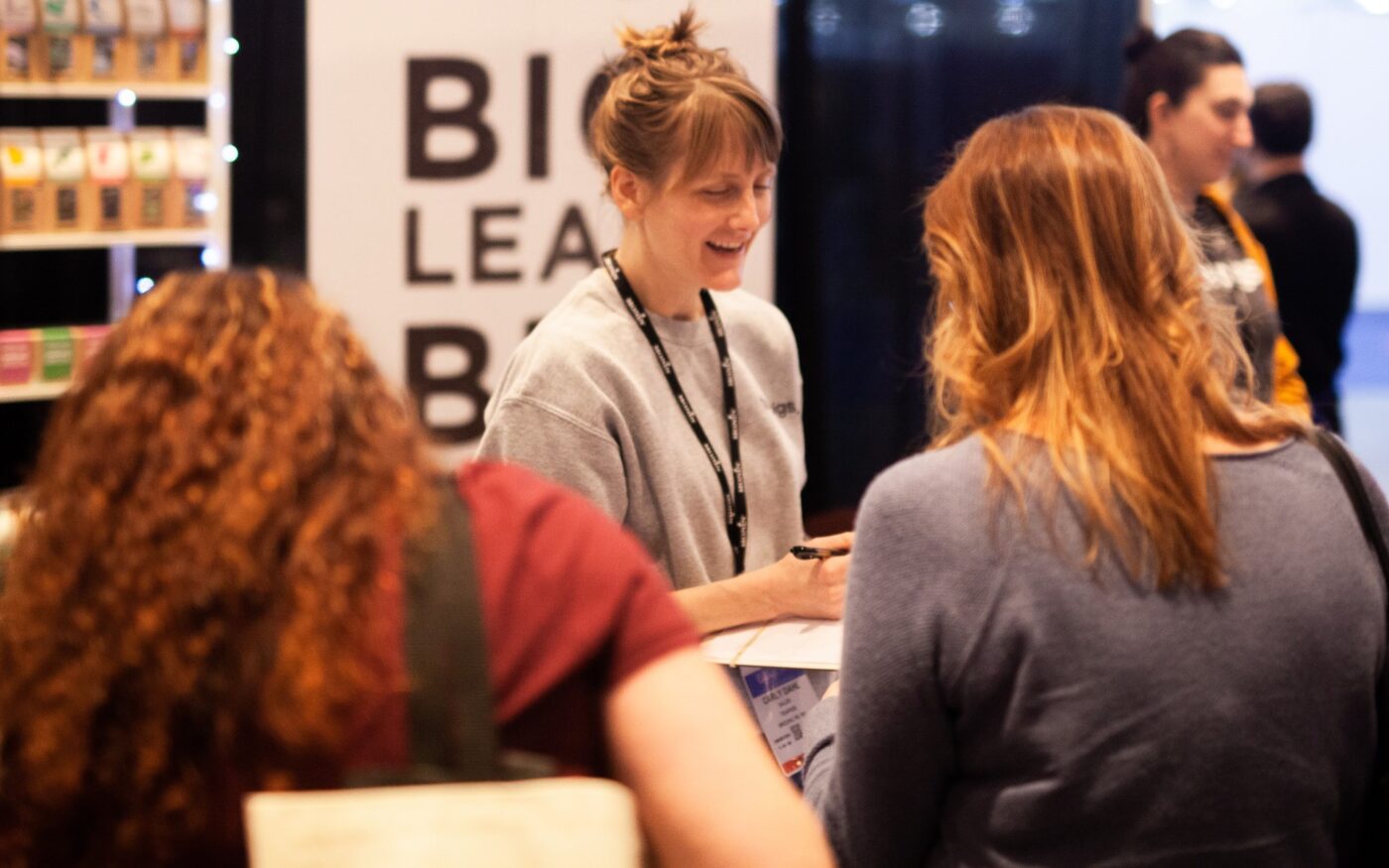
Coffee Fest Los Angeles occupies South Hall G at the Los Angeles Convention Center. On August 21 and 22, it will hold a couple of hundred coffee businesses, a competition stage, a hands-on training program and several thousand people who all want to talk to you. Coffee Fest Los Angeles is a working show - business-to-business, credentialed, built around the independent café and the small roaster - and it rewards operators who arrive with a plan.
Here is one.
The shape of the two days
The floor opens Friday, August 21 at 10 a.m. and closes at 5 p.m. Saturday, August 22 runs 10 a.m. to 4 p.m. That is thirteen hours of exhibit hall, total. It sounds like plenty until you are forty minutes into a conversation about grinder burr geometry at the first booth on your list.
Registration opens at 7:30 a.m. both days and closes at 4:30 p.m. Friday and 3:30 p.m. Saturday. Use that gap. Pick up your badge at 8, get coffee, walk the perimeter of the lobby, read the floorplan on paper before you read it on your feet.
The show occupies South Hall G, with meeting rooms in the 300 Series of the South Building. That two-space layout matters for planning: education and workshops sit a short walk from the hall floor, not across the campus.
Badges, credentials and the fine print
Coffee Fest is a trade event. Attendance requires affiliation with a coffee, tea or related business, or an active plan to open one. Bring proof of that affiliation and a government-issued photo ID - the ID is required to collect your badge at the registration counters.
Three badge types are offered. General Admission covers exhibit hall access plus the complimentary seminar program. The Team Bundle gives five badges for the price of four, which is the obvious move if you are bringing your bar staff. The Gold Pass adds select paid workshops.
Register in advance if you can. Workshop and session capacity is limited and sessions routinely sell out before the show opens. On-site registration is available both days, but it buys you a badge, not a seat.
If you are bringing family: children 12 and under need a $10 child badge purchased on site after a parent signs a waiver, and anyone 13 or older needs a General Admission badge.
What to bring
A short list, refined by everyone who has ever limped out of a convention center at 4 p.m.
Business cards, more than you think - the floor still runs on them. A phone with a QR scanner and a battery pack. Comfortable shoes with real cushioning; polished concrete under carpet tile is unforgiving. A refillable water bottle. A notebook, because typing notes while holding a three-ounce cup does not work.
Bring your numbers. Your current cost per pound, your monthly volume, your drink mix, your average ticket, the make and age of your espresso machine and grinders, your bar dimensions. Vendors can only quote you something useful if you can tell them what you actually do. An operator who says “we pull about 380 drinks a day on a two-group, mostly milk, and our under-counter space is 22 inches” gets a specific answer. An operator who says “what does this cost” gets a brochure.
Bring a shipping plan too. Sample bags, small equipment and literature add up fast, and a folded duffel in your bag beats a broken tote.
Day one: reconnaissance
Resist the urge to buy on Friday morning. Spend the first two hours walking the whole hall at pace without stopping - aisle by aisle, no conversations, just marking the floorplan. You will find three or four exhibitors you did not know existed and cross off two you assumed you needed.
Then work your marked list from the back of the hall forward. Back-of-hall booths are quieter in the first hours, and the people staffing them have more time for you.
Break at 1 p.m., off the floor. Eat something that is not a sample.
Friday afternoon is for the long conversations: equipment, roasting partners, POS, anything involving a contract. Booth staff are freshest on day one and their demo machines are dialed in.
Day two: decisions
Saturday is shorter - six hours - so treat it as a closing day. Return to the three or four booths that mattered, bring the question you thought of overnight, and ask for the number. Saturday afternoon is a useful time to ask about show pricing, package terms and demo-unit availability without assuming that every exhibitor will discount.
Leave the last forty-five minutes free. Late Saturday on a trade show floor is the most productive networking window of the week, and it is entirely unstructured.
How to prep questions for equipment vendors
Equipment is the highest-stakes category on any coffee floor, and the difference between a good booth visit and a wasted one is preparation.
Ask about the thing after the sale. Who services this machine in Southern California, what is the typical response time, and what does a service call cost. Are parts stocked domestically. What is the warranty term, and what voids it.
Ask about the room. Electrical requirements, plumbing, water treatment, counter footprint, heat output. A machine that needs 220V single-phase when your building has something else is not a machine you can buy.
Ask about the bar. Steam wand recovery under back-to-back milk drinks, portafilter height clearance, grinder retention and workflow, how long a barista needs to be trained on it.
Ask for the trial. Demo units, loaner programs, trade-in value on your current setup, and financing or lease terms. Then ask who else in your city runs one and whether you can call them.
Write the answers down at the booth. You will not remember which of four machines had the four-liter boiler.
A sampling strategy that survives to 4 p.m.
Your palate is a finite resource and the hall will spend it for you if you let it.
Set a rule before you walk in: taste with intent, not out of politeness. Sip and dump - nearly every coffee booth has a spittoon or a dump bucket, and using it is normal professional behavior, not an insult.
Front-load the coffee. Cup and taste in the first two hours of each day, when your palate is clean and the booths are calm. Save flavored syrups, energy drinks and RTD categories for after lunch, when precision matters less.
Alternate water constantly. Keep crackers or plain bread in your bag. And take one deliberate twenty-minute reset mid-afternoon - outside the hall, no coffee.
Photograph every sample bag with the company name before it goes in your bag. On Monday, unlabeled bags are just bags.
Making the education program fit the floor
The Coffee Skills Series is the reason to build a schedule rather than wander. It is hands-on, small-group training: espresso extraction and dialing in, milk steaming and latte art, workflow, cupping and sensory fundamentals, pour-over and brewing method work, and a coffee science track that covers grinder maintenance, processing, blending and espresso machine technicals. Specialty sessions cover alternative milk steaming, matcha and tea beverages, and energy drink programming. Instructors include Coffee Fest’s training team alongside industry figures such as Tim Heinze and Anita Tam.
The practical trick is sequencing. Book a technical session - grinder maintenance, say, or espresso machine fundamentals - for the morning, then walk the equipment aisles that afternoon with the vocabulary fresh. You will ask sharper questions and you will hear the difference between a real answer and a pitch.
Send your team to different sessions and debrief over dinner. Five badges covering five subjects is worth more than five people in the same room.
The Latte Art World Championship Open sits on the floor as its own draw. Los Angeles hosts an Official Competition - a 64-competitor, bracket-style, head-to-head format with sudden-death rounds and a $6,000 first prize. Even if nobody on your staff is competing, schedule thirty minutes at the stage. Watching sixty-four baristas pour under pressure is free milk-texture education, and the crowd around the stage is where you meet other operators.
Getting there
The Convention Center is at 1201 South Figueroa Street, at the south end of downtown.
By rail, Pico Station on the Metro A and E Lines is roughly an eight-minute walk. 7th Street/Metro Center, served by the A, B, D and E Lines, is about ten to fifteen minutes on foot. LATTC/Ortho Institute on the E Line is ten to twelve. Metro bus lines 30, 81, 442 and 460 serve the area, and DASH Route F stops on Figueroa adjacent to the building. Metrolink riders from Orange, Riverside, San Bernardino and Ventura counties get a free Metro transfer. There is a Metro Bike Share station in front of West Hall on South Figueroa between 12th and Pico.
Driving is straightforward if you plan the approach. Three garages serve the campus - South Hall, West Hall and Venice - with flat event rates generally in the $35 to $45 range depending on the event and the lot. Cards only; cash is not accepted, and there is no re-entry. South Hall Garage is the natural choice for this show. Note that Pico Boulevard between Figueroa Street and LA Live Way is closed for the campus expansion project, and the West Hall Garage entrance is reached via LA Live Way, so set your navigation to your specific garage rather than the building address. There are Level 2 EV chargers in both the West and South garages.
The neighborhood
You are in South Park, and you can eat well within a ten-minute walk. LA Live sits immediately north of the campus, and the Fashion District begins a few blocks east. Push fifteen minutes further north into the Historic Core and you reach Grand Central Market - which, as it happens, is where a meaningful chunk of modern LA coffee got its public start.
If you have an evening, spend it looking at cafés rather than at more booths. The Arts District, Highland Park, Silver Lake, Chinatown and Koreatown are all a short ride away and all full of rooms worth studying. Look at bar layouts, menu boards, pastry cases and how staff move. That is research too.
The part most people skip
Block ninety minutes on Monday morning before you look at anything else. Sort your cards into three piles: buy now, revisit this quarter, and interesting but not yet. Email the first pile the same day, referencing where you met and what you discussed. Exhibitors talk to hundreds of people in thirteen hours; the operator who follows up on Monday with specifics is the one who gets remembered, and usually the one who gets the better terms.
Sources
- Coffee Fest Los Angeles 2026
- Attend | Coffee Fest Los Angeles
- Coffee Fest Frequently Asked Questions
- Coffee Skills Series | Coffee Fest
- Latte Art World Championship Open | Coffee Fest
- Coffee Fest 2026 | Los Angeles Convention Center
- Directions & Getting Here | Los Angeles Convention Center
- Parking | Los Angeles Convention Center
Research verified August 8, 2026. Schedules, exhibitors, speakers, prices and access details may change; confirm current information with the organizer before attending.
Also exhibiting at Coffee Fest 2026
Show page →

Two Leaves And A Bud
Two Leaves and a Bud is an independent tea company founded in 2004 in the mountains of Colorado.
Spruce Confections
Established in 1992 by David Cohen who was armed with a wooden spoon, mixing bowls, some butter, oats…
Keep reading

First Time at TheFitExpo? An Attendee’s Guide to Anaheim
Two days, eleven-plus free competitions, hundreds of booths and a 9:30am start - how to plan August 29–30 at the Anaheim Convention Center.
How to Shop TheFitExpo Anaheim Like a Buyer, Not a Browser
A category-by-category checklist for comparing supplements, food, apparel, equipment, recovery products and training credentials on a crowded consumer show floor.
Fit Pro Anaheim: Careers, Certification and Recruiting on the Expo Floor
The Anaheim Convention Center weekend doubles as a two-day hiring hall, classroom and credentialing desk for the people who make their living in fitness.